

How Much Does a Smart Home System actually Cost?
Updated: Apr 21
If you're building a new home or undertaking a major renovation, one of the first questions that comes up is:
How much does a smart home system actually cost?
In reality, professionally designed smart home systems typically range from €25,000 to €300,000+, depending on the size of the property, the level of integration, and the technology included.
Smaller retrofit systems sit at the lower end of the range, while large luxury homes with integrated lighting, audio, cinema, security, and automation can reach much higher budgets.
This guide outlines the typical cost levels, what drives pricing, and what technology is commonly included.

3 Typical Smart Home Cost Levels
Not all smart homes are the same. Most projects fall into 3 general tiers, based on complexity and integration.
1. Basic Smart Home Systems (€12,000–€35,000)
Entry-level systems usually consist of standalone smart devices connected through apps or voice assistants.
Typical features include:
· Smart thermostats
· App-controlled lighting or smart plugs
· Wireless speakers
· Video doorbells and cameras
· Basic automation routines
These systems are usually retrofitted into existing homes and rely mostly on wireless devices. While convenient, they generally lack the reliability and seamless integration of professionally designed systems.
2. Mid-Level Integrated Systems (€35,000–€95,000)
At this level, technology begins to work together through a central control system and is typically professionally installed.
Typical features include:
· Lighting control in key rooms
· Multi-room audio
· Centralised control via touch panels or apps
· Integrated security and CCTV
· Media or cinema rooms
· Structured networking for reliable connectivity
These systems are common in larger homes or major refurbishments, where infrastructure can be designed properly during the build.
3. Fully Integrated Luxury Smart Homes (€95,000–€300,000+)
High-end smart homes are usually designed during the construction phase and operate as a single technology ecosystem.
These projects are typically found in:
· Large new-build homes
· High-end refurbishments
· Properties over 5,000 sq ft
Instead of separate gadgets, all systems work together — including lighting, climate, security, audio, and shading.
Typical features include:
· Whole-home lighting control
· Multi-room audio and entertainment
· Dedicated cinema rooms
· Automated blinds and curtains
· Integrated heating and climate control
· Security systems and CCTV
· Whole-home networking infrastructure
· Centralised control via app, touchscreens, or voice
These systems run on professional automation platforms that allow the entire home to be controlled from a single interface.

The Biggest Factors That Affect Smart Home Costs
Every project is different, but several factors have the largest impact on overall investment.

Property Size
The size of the home is one of the biggest cost drivers.
Larger homes require:
· More lighting circuits
· More speakers and control points
· Larger network infrastructure
· Additional programming and commissioning
For example, a 2,500 sq ft home requires significantly less infrastructure than a 10,000 sq ft property with multiple entertainment areas and outdoor spaces.
Lighting Control
Lighting control systems are often one of the largest components of a smart home installation.

Instead of traditional switches, lighting scenes are controlled through keypads, automation, and apps, allowing different moods throughout the house.
Costs depend on:
· Number of lighting circuits
· Keypad types and finishes
· Integration with other systems
In larger homes, lighting control alone can represent €30,000–€70,000+ of the total system cost.
Cinema Rooms
Home cinema systems vary widely depending on the specification.
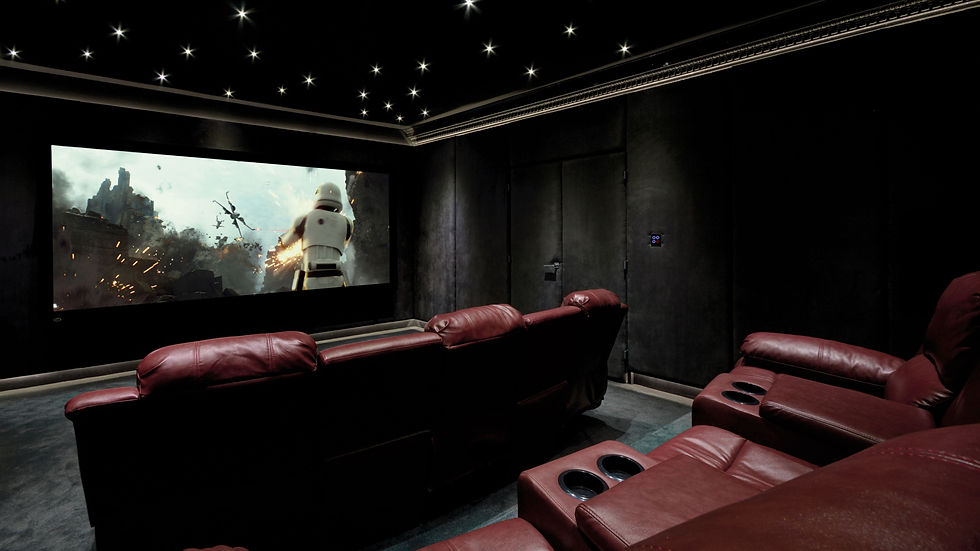
A simple media room might include:
· Large display
· Surround sound
· Basic acoustic treatment
More advanced cinemas can include:
· High-end projection systems
· Professional acoustic design
· Dedicated cinema seating
· Integrated lighting and automation
Costs typically range from €12,000 for simple media rooms to €120,000+ for fully designed private cinemas.
Networking Infrastructure
Modern smart homes depend on high-performance networks to support:

· Streaming services
· Security cameras
· Automation systems
· Multi-room audio
· Fast and reliable Wi-Fi
Larger homes often require:
· Central equipment racks
· Structured cabling
· Enterprise-grade Wi-Fi systems
· Network management systems
For larger properties, networking infrastructure alone may cost €12,000–€30,000+.
Automation Platform
Fully integrated homes rely on a central automation platform that brings all systems together.

This allows homeowners to control everything through:
· Mobile apps
· Wall-mounted touchscreens
· Voice control
· Automated routines
Costs vary depending on the level of integration and programming required, typically ranging from €12,000–€25,000.
Example Smart Home Budget (Luxury Property)
To illustrate how costs combine, consider a typical example.
Example: 7,500 sq ft New-Build Home
System Component Typical Cost
Lighting control €35,000 – €70,000
Whole-home audio €12,000 – €30,000
Cinema room €18,000 – €70,000
Networking infrastructure €12,000 – €30,000
Security and CCTV €12,000 – €25,000
Automation platform €12,000 – €25,000
Estimated total: €105,000 – €250,000+
The final cost depends heavily on the level of specification, system design, and property size.
Why Smart Home Systems Should Be Designed Early
The most successful smart home projects are planned during the architectural design stage, not added later.

Early design allows for:
· Proper infrastructure planning
· Cleaner installations with fewer visible devices
· Better coordination with lighting and electrical design
· Seamless integration with the architecture
When technology is planned early, the result is usually more discreet, reliable, and future proof.
Why Quotes Can Vary Between Installers
Smart home proposals often vary significantly between companies because of differences in:
· System design and planning
· Equipment quality
· Programming expertise
· Integration capabilities
· Ongoing support and maintenance
Smart home systems are not simply collections of devices — they require careful design, installation, and commissioning to ensure everything works reliably together.
Who Smart Home Systems Are Best Suited For?
Fully integrated smart home systems tend to make the most sense in:
· Large new-build homes
· Luxury refurbishments
· Homes with multiple integrated systems
· Projects where technology can be designed early in the build process
For smaller homes or simpler needs, individual smart devices may be more practical and cost-effective.

Planning Technology for a New Home
If you’re planning a new home or a major renovation, the best time to explore smart home technology is during the early design phase.
At this stage, systems can be planned alongside:
· Architecture
· Electrical Layouts
· Lighting Design
· Interior Layouts
This ensures the technology integrates naturally into the home rather than appearing as an afterthought.
When designed properly, a smart home allows lighting, climate, audio, security, and automation to work together seamlessly, creating a more comfortable, efficient, and intuitive living environment.

Email: info@luxavo.ie or Tel: 01 9081202


Comments